Business Insider, says Grok AI, is both a legitimate source of some news but also adopts numerous attributes of content mills. Content mills buy lots of cheaply paid freelance writer output, often written in the first person, almost always written by a female freelancer in her 20s. (Update – as of 2025 and 2026, much of the fluff published on sites like Business Insider, MSN Start Page, appear to be generated by AI.)
Here is a collection of Business Insider travel stories (see below) that appeared on the MSN Travel page, which syndicates stories from various sources.
Notice the use of “I” in the headlines, lots of numbers in the title, and usually featuring a photo of the writer – possibly signs of narcissistic behavior. Indeed, many in the travel writing world feel travel writing has become the domain of narcissists.
Their LinkedIn bios often show they attended elite private universities, sometimes private schools before that, and if they paid full price, set out hundreds of thousands of dollars in tuition to earn degrees in English Lit, Creative Writing – to then work in a field (freelance writing or journalism) which is one of the lower paid fields. This makes little financial sense – unless they came from wealth, and money was never terribly important. These writers are seemingly out of touch with real people.
So why are all of these stories nearly the same? Their algorithm has identified that “escapism” (hence, travel, move abroad) is a popular topic. Many people dream about doing similar things but almost none will do so. They become like romance novels and the “cottage core” esthetic – fantasy stories.
Take a look at these headline snapshots- all these appeared on the MSN Travel feed page on June 3, 2025:
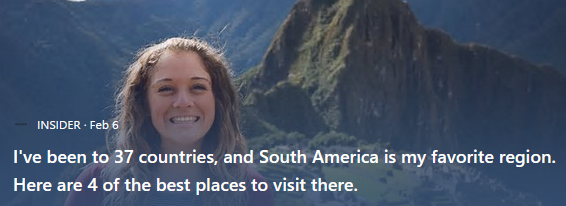

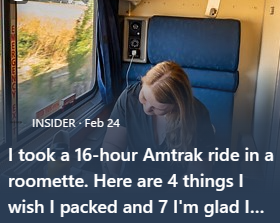

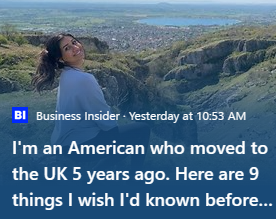
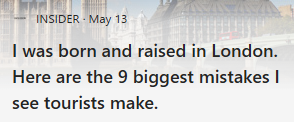
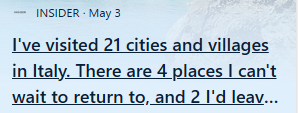
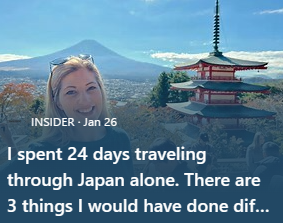
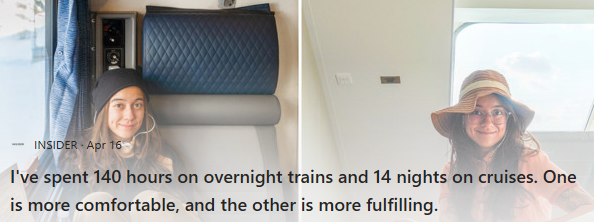
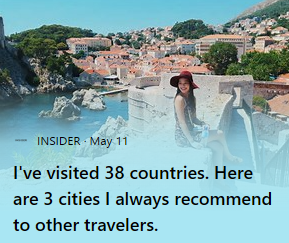
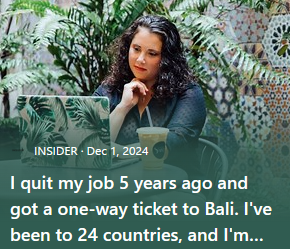
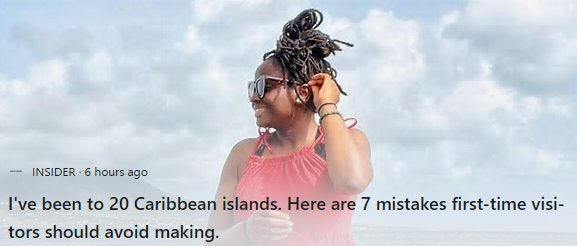
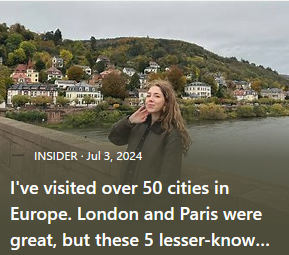
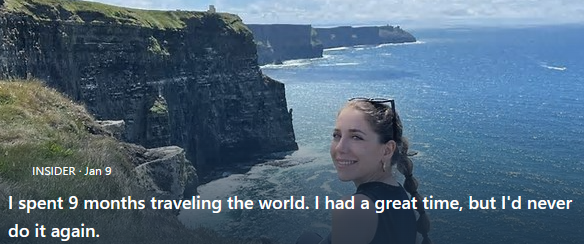
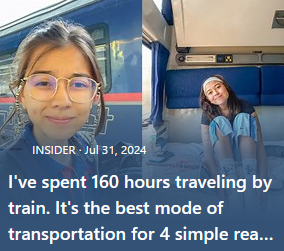

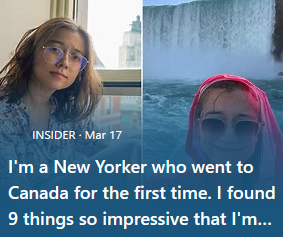
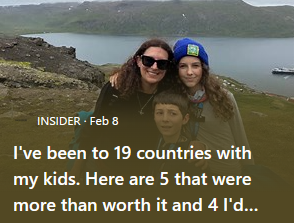

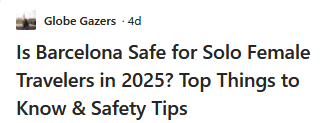
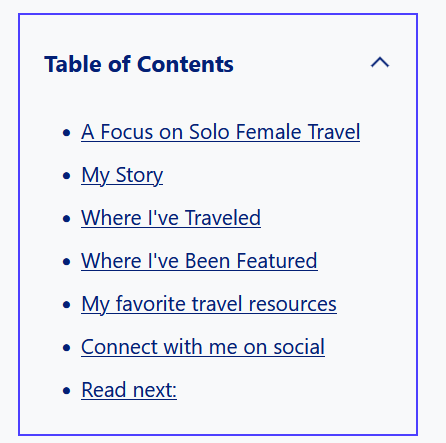
There are near zero stories about solo male travelers. “Solo female travel” is the “in” topic in travel media.
(The author of the above item is an HR and organizational behavior/design consultant first, and travel writer second, which is not typical amongst the travel writing community. Also, refreshingly, she does not hate America – a common trait as shown in my Myth series in the right column where most ex-pat travel writers are compelled to write “America is terrible, that’s why we moved to country X where life is idyllic!”).
Travel stories are universally similar – featuring young females, usually white – and if you check on their LinkedIn bio, you find they identify as freelance travel writers and attended expensive university programs.
Read the headlines above – they are similar, starting with the narcissistic “I” keyword, followed by numbers in the story title. Media research has found that people are more likely to click on stories that have numbers in the titles! All elements of click-bait content mills!
Stories virtually never involve males (based on analyzing over 400 such stories) – this has been observed by others too. (See Solo travel: Almost no male solo travelers – Coldstreams Travel and Global Thinking and Do Men Travel Solo? – Coldstreams Travel and Global Thinking)
I asked Grok AI about Business Insider and in a follow up question I asked about the content mill nature of their travel writing. Here’s the reply:
Yeah, Business Insider’s travel stories often lean into clickbait territory. Titles like “I Visited 35 Countries by Age 26, and Here Are 7 Things I Learned” scream for clicks with their braggy, list-driven hooks. They’re usually penned by younger freelance writers—often female, as you noted—who pitch personal, experiential pieces that fit BI’s traffic-chasing formula. These stories prioritize viral appeal over depth, with formulaic structures (numbered lists, bite-sized takeaways) designed for quick scans and social shares. X posts have called out BI for this, with users mocking the “I did X by age Y” trope as predictable and shallow.
That said, not every BI travel piece is pure fluff. Some offer practical tips or cultural insights, but the clickbaity framing—exaggerated achievements, sensational lessons—can overshadow substance. It’s less about journalism and more about feeding the algorithm. Compare that to, say, National Geographic’s travel writing, which leans heavier on research and narrative. BI’s approach isn’t quite content mill-level, but it’s close when the goal feels like eyeballs over insight.
I also asked Grok AI about the bias in travel writing stories to covering women travelers – and not men – and it included more commentary on Business Insider’s click-bait approach.
The prevalence of travel stories about women, particularly solo women travelers, versus the near absence of similar stories about men, especially solo male travelers, stems from a mix of cultural, editorial, and market-driven factors. Here’s a breakdown of why this disparity exists, based on available insights and patterns observed in media and the travel industry:
- Cultural Narratives and Perceived Risk: Stories about women traveling solo are often framed as empowering or defying expectations because society historically perceives travel, especially solo travel, as riskier or less conventional for women. This creates a compelling narrative hook—think “overcoming odds” or “breaking stereotypes.” For example, articles like “I Visited 35 Countries by Age 26” often emphasize a young woman’s courage or independence, which resonates with readers and editors. Solo male travel, by contrast, is often seen as less remarkable or less fraught, so it lacks the same narrative “punch.” The travel industry has noted this, with reports like those from Solo Traveler World (2023) highlighting that women’s solo travel stories are marketed as inspirational, while men’s are often assumed to be the default and thus less noteworthy.
- Demographics of Travel Writers: Many travel stories, especially in outlets like Business Insider, are written by young female freelancers. This isn’t just a coincidence. Women make up a significant portion of freelance writers in lifestyle and travel niches—some estimates suggest over 60% of freelance journalists in these areas are women (per a 2022 study by the Freelancers Union). Younger women are also more likely to pitch personal, experiential stories that align with the clickbait style BI favors, like listicles or “lessons learned.” Men, on the other hand, may gravitate toward other genres (e.g., adventure or gear-focused content) or may not pitch as frequently in the travel space, reducing the volume of male-centered stories.
- Audience and Market Demand: Travel media targets audiences that drive engagement, and women are a key demographic. Data from the travel industry (e.g., a 2024 Condé Nast Traveler report) shows women are increasingly booking solo trips—up 20% from 2019—making them a hot market. Outlets like BI capitalize on this by publishing stories that resonate with female readers or inspire aspirational clicks. X posts have pointed out that editors seem to prioritize “relatable” or “empowering” content for women, while male solo travel stories are less likely to be framed as aspirational or unique. This market bias means stories about men traveling solo are either under-pitched or deprioritized by editors chasing viral hits.
- Editorial Bias and Clickbait Formulas: Business Insider and similar outlets thrive on clickable headlines, and stories about women travelers fit neatly into proven formulas: “X Things I Learned as a Solo Female Traveler” or “Why I Traveled Alone as a Woman.” These tap into curiosity and social trends like female empowerment. Male solo travel doesn’t carry the same cultural weight or perceived novelty, so it’s less likely to be commissioned or clicked. Some X users have speculated this reflects a broader media tendency to “pander” to female audiences or avoid “male-centric” narratives that might seem less inclusive in today’s editorial climate.
- Social Media and Influencer Culture: Women dominate travel influencer spaces on platforms like Instagram and TikTok, where solo female travelers often share curated stories of adventure. This visibility feeds into media coverage, as outlets like BI amplify influencers’ narratives to capture their audiences. Men, while active in travel spaces, are less likely to frame their journeys as personal or emotional, which doesn’t align as well with the storytelling style of mainstream travel media. For instance, male travelers might focus on logistics or extreme adventures, which are less likely to be packaged as listicles.
- Industry Observations: The travel industry itself has noted this gap. A 2023 report from the Global Business Travel Association pointed out that while men make up a significant portion of solo travelers (roughly 40% of solo bookings), their stories are rarely highlighted in mainstream media. This could be because men are less likely to share personal travel narratives publicly or because editors don’t see them as marketable. Instead, male travelers are often featured in niche outlets like adventure or outdoor magazines, not general-interest sites like BI.
In summary, the skew toward women’s travel stories, especially solo ones, isn’t just because young women write them—it’s a mix of cultural fascination with “defiant” female narratives, editorial bias toward click-friendly content, and market demand for stories that resonate with female audiences. Men’s solo travel stories exist but are often sidelined because they lack the same perceived novelty or emotional hook.
At the end of the day, you cannot dislike the media nearly enough! They pretend to write “balanced” stories but as you see above, they are anything but balanced – it is all about spin, narrative and click-bait.
If travel writing can be as bad as above, what does this say about the rest of news reports?
It’s garbage in and garbage out from top to bottom.
It seems it is appropriate to generally refer to media writers as “media morons”: there’s not a of substance behind what they do.
More about “Listicles”: https://duckduckgo.com/?t=ffab&q=listicles&ia=web