Amazon deals on Point n Shoot cameras http://amzn.to/2cVzLqI

Go here: Amazon list of discounted Point n Shoot cameras

Point n shoot cameras have come a long way, just as have the high end and very expensive professional and near professional cameras.

Traditionally, “point n shoot” cameras have had small sensors that did not work well in low light, and may not have had access to all camera controls.

Today, many of these point n shoot cameras features larger sensors (1/1.7″ up to full 1″ sensors), can shoot in RAW and have a full set of manual controls for full image control. Plus, many of the new sensors perform much better in low light than they did just a few years ago.

Truth is, it is possible to get near professional quality photos out of low end point n shoots, especially when shooting in RAW and using post processing software. Indeed, we can now simulate narrow depth of field “bokeh” in software processing.

This summer I took only a point n shoot and my Nikon 1 camera on a vacation trip just to see what I could do. Most people would not be able to tell the difference between those shots and those taken on higher end gear.

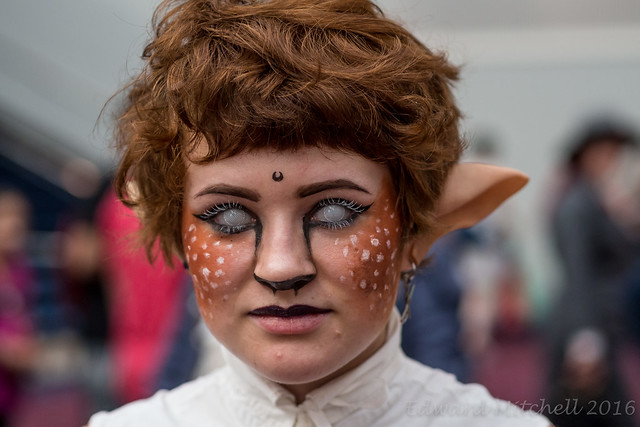
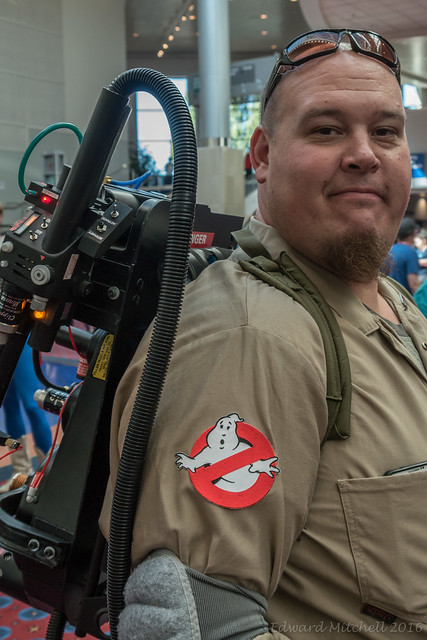
2016 Rose City Comic Con Photos (2D and 3D)

Rose City Comic Con 2016. Oregon Convention Center, Portland, Oregon.
Cosplay, comic books, science fiction fantasy, gaming, movies, pop culture.

To see all the photos, click on the links to go my Flickr photo albums.

Rose City Comic Con 2016 - SundayRose City Comic Con 2016 - Sunday

Rose City Comic Con 2016 - SundayRose City Comic Con 2016 - SundayRose City Comic Con 2016 - SundayRose City Comic Con 2016 - Sunday

Rose City Comic Con 2016 - Sunday

Rose City Comic Con 2016 - Sunday

Rose City Comic Con 2016 - SaturdayRose City Comic Con 2016 - Saturday

Rose City Comic Con 2016 - SaturdayRose City Comic Con 2016 - Saturday

Computar f/1.2 12.5-75mm 16mm film lens on Nikon 1

These test shots were taken using a Nikon 1 J1. Not much attention was given to focus or exposure as the goal was to demonstrate vignetting and where the lens works best.

Created these shots as someone asked for some examples of vignetting with the Nikon 1 and this lens combo.

12.5mm, f/4Resized0002

20mm f/4

Resized0003

30  mm

Resized0006

50mm

Resized000475 mm

Resized0005


Learning to “see in 3D” to improve 2D photos

As a 3D stereographer, I am always aware of the 3D space in front of me. And when shooting 2D, I often wish I was shooting 3D!

The key idea, in this linked column, is that by learning to see in 3D, we can improve our 2D photos. You might think “seeing in 3D” is obvious – after all we see a 3D world around us. But truly, as 3D photographers know, learning to see in 3D is a technique all unto itself.

About negative space, looking 3D and some other things.

Source: About negative space, looking 3D and some other things. By Dirk Dom – STEVE HUFF PHOTOS

The demographics of camera users

The author, at the link below, notes that those under 30 predominately use their smart phone to take photos.

Older travelers use compact point and shoot cameras, and middle aged and older often shoot with higher end DSLRs.

One thing I noticed on my trip to the UK , specifically London, was the abundance of cameras.

Source: Cameras, Cameras, Everywhere | Garden Walk Garden Talk

A recent Nikon item said that 55% of their DSLR sales are now going to consumers upgrading from smart phones.

My observations are in line with those of the linked article. I noticed this summer an increase in the number of travelers using an actual camera, rather than a smart phone. “Bridge cameras” – which look a bit like DSLRs but have a built-in, non-interchangeable lens, are popular.

The market is shifting a bit back towards real cameras. My hunch is many consumers will start out with larger cameras but eventually retreat to smaller cameras as they find the size and weight becomes cumbersome.

I suspect the 1″ cameras, with excellent image quality and good low light performance, may be the sweet spot for size, quality and convenience.

As the next blog post notes, post processing software is enabling small cameras to begin to rival their big cousins’ features. Software tools today provide high quality noise reduction, enabling small sensor cameras to work more like big sensors, and software tricks can even simulate bokeh.

Guide to 3D and Drones

Coldstreams 3D and Drones