Category Archives: 3D Tech

Corel Video Studio Pro X7

Corel’s latest video editing software is now at version X7.

I did some quick tests to check on just a few features.

Plus side: It renders output video files super fast compared to many alternative editors. On my quad core Windows 7 system, rendering seems to be roughly “real time”. One minute of video is rendered in about one minute. That’s fast.

The program also features a 2k to 4k conversion feature. This definitely works but I am unable to evaluate the result as I do not have any 4k displays to watch it on. However, I did upload a test clip to Youtube and the result certainly looks good on my 2K TV (which means its downsized back down of course).

Editing is easy enough that I figured out most everything I wanted to do without resorting to help/documentation.

The package also includes a nifty Screen Capture utility for recording video clips from things you are doing on screen. This is great for creating tutorials. This utility worked great for me in my tests and would be worth buying the whole suite just for screen capture!

For editing 2D video, its quite respectable and priced inexpensively.

Minus side: Its 3D capabilities are very limited. It can import side-by-side and MVC video files, but it has no 3D video clip adjustment features. If you cannot fix parallax in post, its not terribly useful, unfortunately. And that’s too bad, because it also rendered my 3D MVC video clips faster than I expected.

Quick verdict: For 2D video editing, Corel Video Studio Pro X7 is an extremely fast editor – fast to edit, fast to preview and fast to render.  If your work is 2D oriented, this product should be on your list of editors to look at. But for 3D, its lacking in critical features such that its really not suitable for 3D work.

The product can be purchased and downloaded directly from Amazon:

Enhanced by Zemanta

Sony discontinued the TD30V 3D camcorder

I do not know when this occurred but it was canceled as of the January CES and shows as a discontinued product in the Sony online store. The product remains available at retailers, such as at Amazon.

The camera and consumer electronics companies have all seen multi year slow downs in sales. In the video area, for cameras and TVs, the new push is for 4k. 4k makes a lot of sense for content creation but there is almost no consumer market to watch 4K and there still is no distribution mechanism for 4K video except for Youtube.  Netflix says they will introduce some 4K distribution soon too.

Sadly, this means there are now no more high quality, consumer-accessible 3D video cameras available.  These all-in-one products did a good job for shooting 3D within a limited depth box out to perhaps 30 (10 m), and sometimes 50 feet (16 m). Beyond that, paired cameras with wider lens spacing produce better quality 3D images.

Consumers are seeking out 3D content but it remains a niche market in the home – nearly all top selling movies in 2013 were 3D movies, and 3D Blu-ray sales were up nearly 100% YoY. But there does not seem to be much interest in shooting one’s own 3D except by serious hobbyists and professionals.

I expect the 4k content creation tools – in other words, cameras – to be a very good selling market for some time to come. Certainly more profitable than the consumer 3D camera market.

Enhanced by Zemanta

Nikon 1 J1 J2 compact mirrorless cameras

I recently sold off some older gear that I no longer use. At the same time I went looking for a smaller camera form factor for my 3D work. I already shoot smaller Lumix GH-2 pairs but sometimes I want smaller than that, and especially to place the lens centers closer together for a narrow interaxial.

I explored a lot of options, starting from thinking I wanted something like the Canon s110 or s120. But after building up a spreadsheet of cameras, camera features, and the features I needed, I ended up picking up some “used” Nikon 1 cameras. (“used” because the J2 was in a factory sealed box, so go figure.) The J1 and the J2 are the same camera, for the most part, except that the J2 has twice the resolution on the LCD back panel. Neither camera has an eye viewfinder (need the V1 or V2 for that). But when I am shooting 3D, I use the back panels almost exclusively so I can look at both cameras at the same time.

I will eventually write up more about the decision process that led to the Nikon 1 system cameras (small size, interchange-able lenses, decent low light performance) versus alternatives. And I will eventually do a write up about their use in 3D. This may be a while so do be patient! I am a huge fan of mirrorless – small, light weight means everything to me. At this point, I would not consider a mirror-based “DSLR” (keep in mind I am primarily a video shooter).

The two still photos, below, were taken with the J2 yesterday. Both were shot in RAW mode and processed in Lightroom. Both photos really used the RAW mode to advantage due to the wide dynamic range of these scenes.

On this hike I shot 3D video using paired Lumix GH-2s, and carried the J2 around my neck for “snap shots”. I am very pleased with the results. Very pleased.
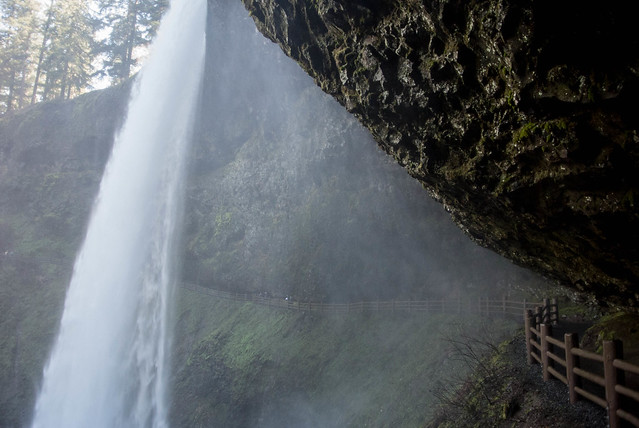
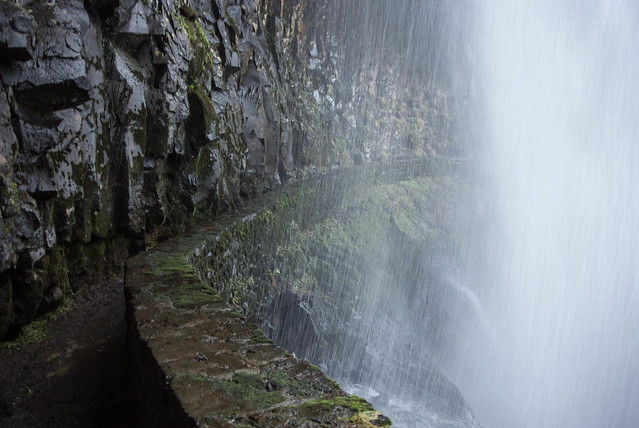
DSC_0167.jpg


DSC_0188.jpg


The video tests I have shot with the Nikon 1 more than meet my expectations. Because I am primarily a 3D video shooter, video quality is important to me. When I looked online at Nikon 1 samples, most of what was posted was junk. Junk as in very poorly shot, shaky handheld, whip pans type of video, wrong shutter speeds, etc.  I found only one video (hosted on a personal web site, not Youtube or Vimeo or DailyMotion) that was shot properly to show off the camera’s capability.

The main limitation is the stock kit lens – 10-30mm, starting at f/3.5. It’s a slow lens. And the slowest video shutter speed is 1/60th of a second, not 1/30th of a second. That means video night scenes are pushed to ISO 3200. Ick. The solution is to get a fast lens. Nikon sells one, reasonably priced, at f/1.8. It’s also possible to use various fast Super 16mm film camera lenses as the Nikon 1 sensor size is about the same size as the 16mm frame size. There are lots of f/1.2, f/1.3 c-mount lenses that work well. More on that topic another day too!

Enhanced by Zemanta